How should entities and areas be organised?
Stable names, areas and device ownership make automations readable. We avoid rules tied to temporary labels or duplicate entities left behind after device replacement.
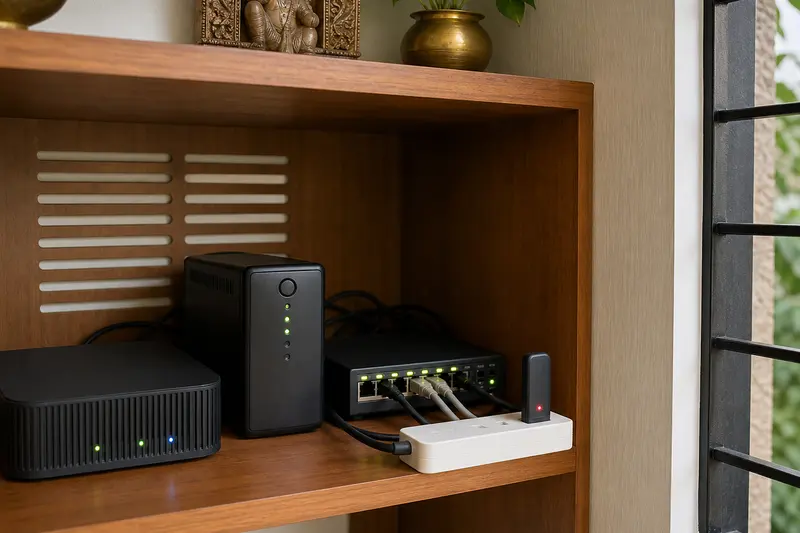
Delhi NCR · Automation
For a Delhi NCR Home Assistant project, the first useful conversation is about interfaces and responsibility, not hardware. The Greenfields Colony office asks what currently owns Dashboards, what the proposed system must exchange with Backups, and who will operate Local control after handover. Those answers expose dependencies, access restrictions and planned downtime before equipment enters the discussion. SmartR Spaces - Greenfields Colony confirms the exact address and survey logistics rather than treating the NCR label as a promise of availability.
The short answer
A Home Assistant automation has a trigger, optional conditions and one or more actions. Integrations expose entities from supported devices or services. Local hosting can reduce cloud dependence, but each integration has its own support level and the installation still needs backups and an update plan.
For the full technical explanation, use our Home Assistant planning guide.
What the design has to settle
Stable names, areas and device ownership make automations readable. We avoid rules tied to temporary labels or duplicate entities left behind after device replacement.
Home Assistant documents backup creation and restoration across installation types. A project record states where encrypted backups are kept, who holds the emergency material and how a restore is tested.
The trigger, conditions and actions are named around the intended behaviour. Timeouts, unavailable entities and restart behaviour are handled explicitly for anything more important than a decorative notification.
We review official support status, local or cloud dependency and the device interface. A community integration may be useful, but its maintenance risk belongs in the scope rather than a footnote after…
Need more depth? The complete Home Assistant guide covers the wider technical context.
Technical relationships
These service-specific diagrams come from the canonical technical record; they do not depict a completed local project.


Decision aid
| Question | Preferred evidence | If unclear |
|---|---|---|
| Does it work locally? | Official integration documentation | Treat cloud loss as a known dependency |
| Who maintains it? | Core or named project owner | Plan replacement or accept risk |
| Can it be restored? | Tested encrypted backup | Do not approve handover |
Local planning
Branch facts are verified. Community observations, when present, are anecdotal and address-specific; they are not presented as citywide facts.
Evidence scope: This is one planning request, not a completed-project report. It does not prove that the named products interoperate, that future protocol support will arrive or that a particular installer failed.
What this service can and cannot address: SmartR Spaces can document topology, compatibility, zones, scenes, trade coordination, bench tests, manual fallback and handover. It cannot promise future Matter support, universal cross-brand compatibility or that wireless controls are always preferable to wired controls.
Local planning questions
List the systems that own Dashboards, exchange data or commands with Backups, and present controls for Local control. Each interface needs a method, responsible party and test condition.
SmartR Spaces - Greenfields Colony checks the exact address, site contact, access permissions and workable visit window before committing a survey. The Delhi NCR label by itself is not a serviceability promise.
The client should identify the owner of the incumbent system and the person authorised to accept downtime, configuration changes and final test results. Unassigned third-party work is recorded as an exclusion or dependency.
Create individual rows for Dashboards, Supported integrations, Automations, Backups, Maintenance, Limitations. Each row should name the incumbent owner, proposed connection, data or command direction, access authority, test witness and fallback when the interface cannot be completed.
Installation context
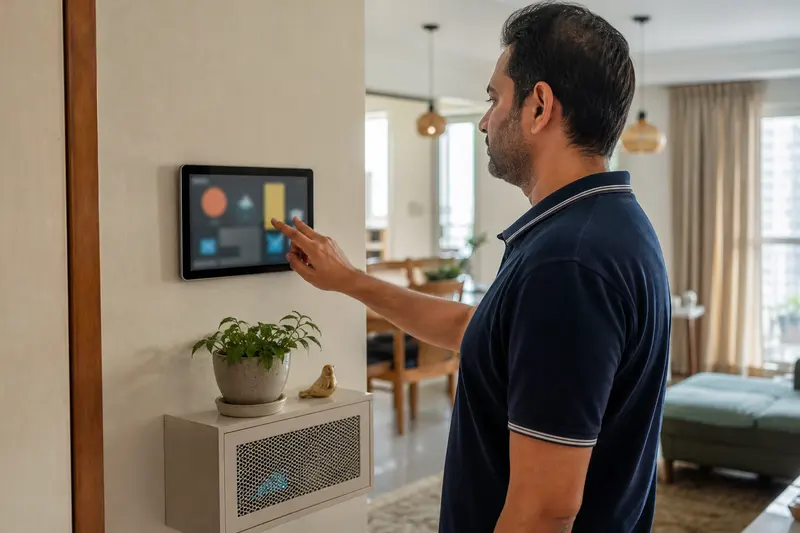
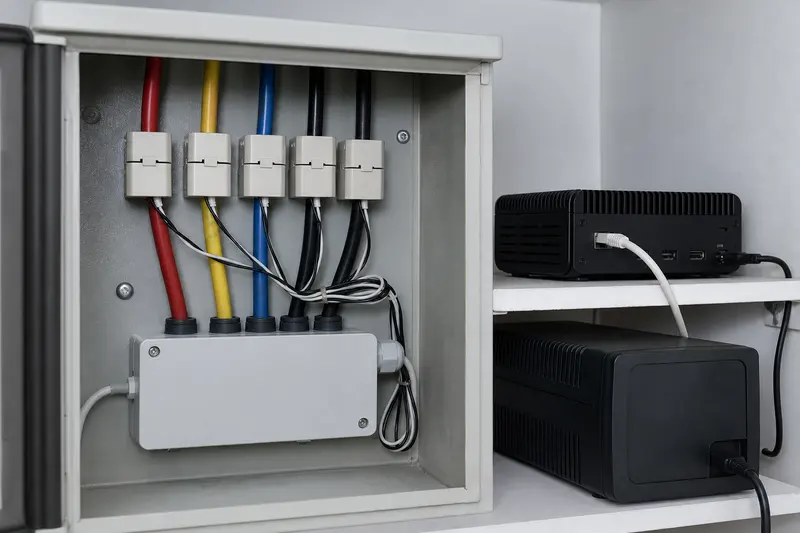
Representative photography supports planning; it is not presented as a completed SmartR Spaces project in Delhi NCR.
Verified branch
Confirm availability before visiting.
Continue planning