An access system is a chain of decisions
For boom barriers, remote control often calls for low-volume private lane. The reader captures it, a controller checks the rule, a lock or motor acts, and the system records what happened. Door…
Kota · Access Control and Entrance Automation
In Kota, we plan boom barriers backwards from the handover test rather than forwards from a device list. The Aerodrome Circle team asks how a user will prove Parking entry and exit works, what manual action remains available when Automatic barriers is unavailable, and which records are needed to maintain RFID entry. Those checks define the survey and commissioning evidence. SmartR Home - Aerodrome Circle still confirms the exact project address before scheduling; the office location tells us nothing about conditions elsewhere in Kota.
The short answer
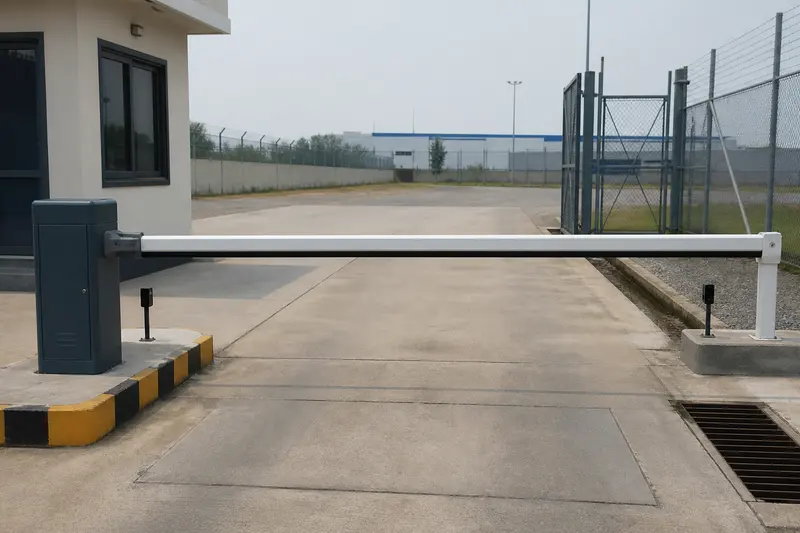
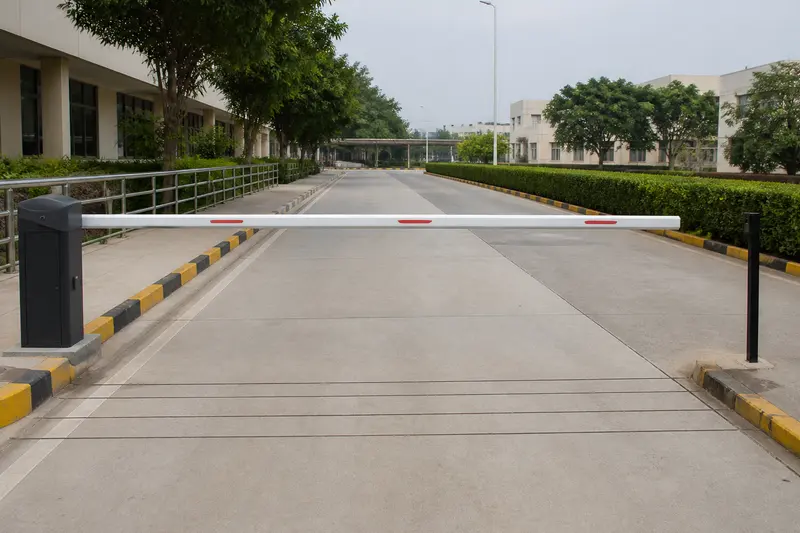
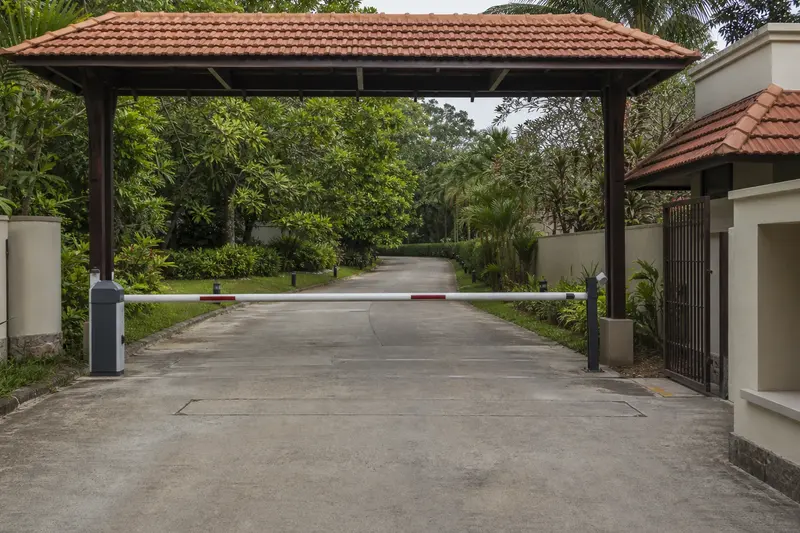
An automatic boom barrier controls vehicles at a defined lane. Selection starts with clear width, arm length, opening time, traffic rate and wind exposure. Vehicle detection, pedestrian safety, cabinet mounting and manual recovery need separate checks.
For the full technical explanation, use our Boom Barriers planning guide.
What the design has to settle
For boom barriers, remote control often calls for low-volume private lane. The reader captures it, a controller checks the rule, a lock or motor acts, and the system records what happened. Door…
For boom barriers, ANPR often calls for known plates and searchable events. The useful question is who can issue, suspend, replace and audit them. Shared PINs are cheap but hard to attribute.…
For boom barriers, remote control often calls for low-volume private lane. We survey the physical opening first, then check duty cycle, holding force, sensor positions, weather exposure, drainage, cable routes and service…
A small office that opens twice an hour and a residential tower at 9 AM can share the same lane width but need different duty ratings. Tailgating risk, visitor handling, two-wheelers and…
Need more depth? The complete Boom Barriers guide covers the wider technical context.
Technical relationships
These service-specific diagrams come from the canonical technical record; they do not depict a completed local project.


Decision aid
| Option or situation | Good fit | Question to settle |
|---|---|---|
| Remote control | Low-volume private lane | Manual administration |
| RFID tag | Regular vehicles | Tag issue and misuse |
| ANPR | Known plates and searchable events | Lighting, plate quality and false reads |
| Ticket or visitor approval | Public or mixed traffic | Operator workflow and queue time |
Local planning
Branch facts are verified. Community observations, when present, are anecdotal and address-specific; they are not presented as citywide facts.
Evidence scope: No hardware inspection, maintenance record or second account confirms the cause. The post cannot support a claim that hostels in the area have unsafe locks.
What this service can and cannot address: SmartR Spaces can inspect door alignment, hardware, credentials, emergency egress, audit events and maintenance procedures. It cannot diagnose the reported door from a Reddit post or guarantee that access technology prevents every unauthorized entry.
Local planning questions
Test the promised user outcome for Parking entry and exit, the defined fallback for Automatic barriers and the operator procedure for RFID entry. Results should be recorded against the approved scope, not accepted from a product demonstration.
Share the exact address, expected user actions, existing equipment, known faults and any manuals or drawings. SmartR Home - Aerodrome Circle uses that information to decide what must be inspected.
The design should state the safe or manual fallback, the visible fault indication and the support owner for each critical function. A fallback is verified during commissioning only when it is part of the written scope.
Keep separate results for Parking entry and exit, ANPR integration, Automatic barriers, RFID entry. For each one, record the user action, expected response, measured or observed result, fallback check, outstanding defect and person who witnessed acceptance.
Installation context
Representative photography supports planning; it is not presented as a completed SmartR Spaces project in Kota.
Verified branch
Confirm availability before visiting.
Continue planning