How should entities and areas be organised?
Stable names, areas and device ownership make automations readable. We avoid rules tied to temporary labels or duplicate entities left behind after device replacement.
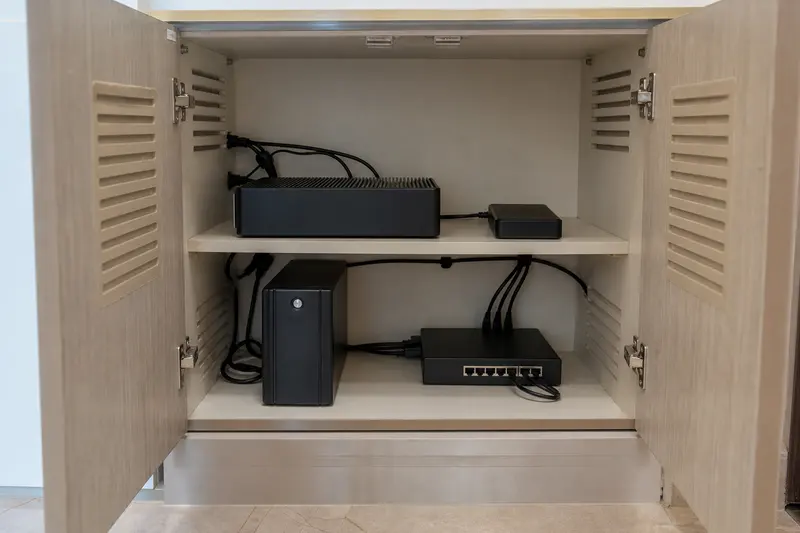
Kota · Automation
In Kota, we plan home assistant backwards from the handover test rather than forwards from a device list. The Aerodrome Circle team asks how a user will prove Supported integrations works, what manual action remains available when Maintenance is unavailable, and which records are needed to maintain Dashboards. Those checks define the survey and commissioning evidence. SmartR Home - Aerodrome Circle still confirms the exact project address before scheduling; the office location tells us nothing about conditions elsewhere in Kota.
The short answer
A Home Assistant automation has a trigger, optional conditions and one or more actions. Integrations expose entities from supported devices or services. Local hosting can reduce cloud dependence, but each integration has its own support level and the installation still needs backups and an update plan.
For the full technical explanation, use our Home Assistant planning guide.
What the design has to settle
Stable names, areas and device ownership make automations readable. We avoid rules tied to temporary labels or duplicate entities left behind after device replacement.
Home Assistant documents backup creation and restoration across installation types. A project record states where encrypted backups are kept, who holds the emergency material and how a restore is tested.
The trigger, conditions and actions are named around the intended behaviour. Timeouts, unavailable entities and restart behaviour are handled explicitly for anything more important than a decorative notification.
We review official support status, local or cloud dependency and the device interface. A community integration may be useful, but its maintenance risk belongs in the scope rather than a footnote after…
Need more depth? The complete Home Assistant guide covers the wider technical context.
Technical relationships
These service-specific diagrams come from the canonical technical record; they do not depict a completed local project.


Decision aid
| Question | Preferred evidence | If unclear |
|---|---|---|
| Does it work locally? | Official integration documentation | Treat cloud loss as a known dependency |
| Who maintains it? | Core or named project owner | Plan replacement or accept risk |
| Can it be restored? | Tested encrypted backup | Do not approve handover |
Local planning
Branch facts are verified. Community observations, when present, are anecdotal and address-specific; they are not presented as citywide facts.
Evidence scope: The two reports conflict, so no frequency claim should be made without utility data and a site-level history.
What this service can and cannot address: SmartR Spaces can define backup runtime, safe restart behaviour and critical-device UPS scope. It cannot correct the utility network.
Local planning questions
Test the promised user outcome for Supported integrations, the defined fallback for Maintenance and the operator procedure for Dashboards. Results should be recorded against the approved scope, not accepted from a product demonstration.
Share the exact address, expected user actions, existing equipment, known faults and any manuals or drawings. SmartR Home - Aerodrome Circle uses that information to decide what must be inspected.
The design should state the safe or manual fallback, the visible fault indication and the support owner for each critical function. A fallback is verified during commissioning only when it is part of the written scope.
Keep separate results for Supported integrations, Automations, Backups, Maintenance, Limitations, Local control. For each one, record the user action, expected response, measured or observed result, fallback check, outstanding defect and person who witnessed acceptance.
Installation context
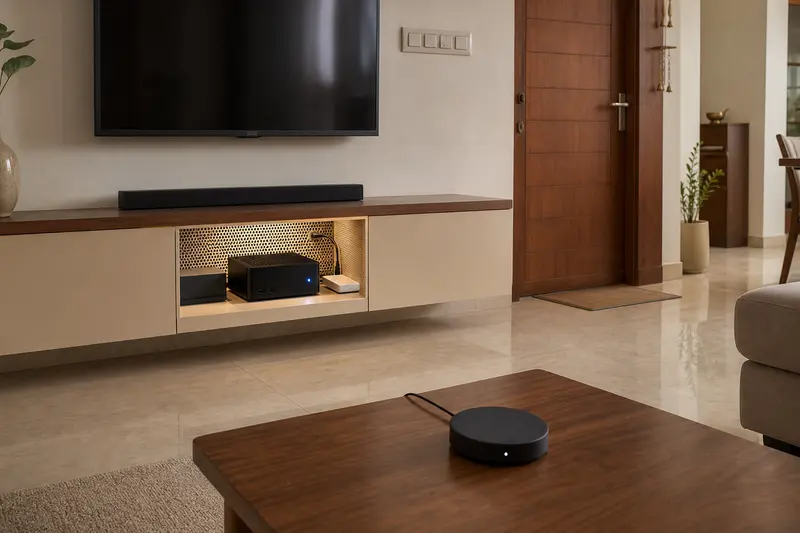
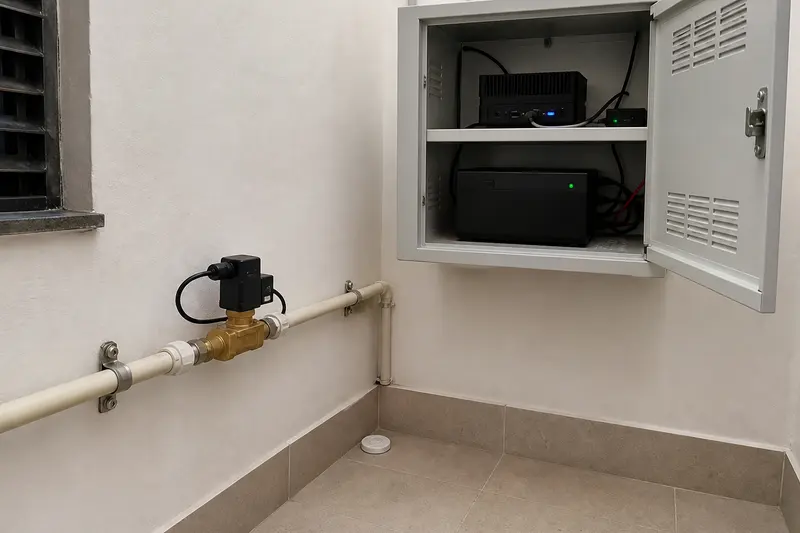
Representative photography supports planning; it is not presented as a completed SmartR Spaces project in Kota.
Verified branch
Confirm availability before visiting.
Continue planning