Who owns the temperature loop?
The equipment controller normally protects compressors, fans and plant sequences. The automation layer should request permitted modes or setpoints rather than bypassing those safeguards.
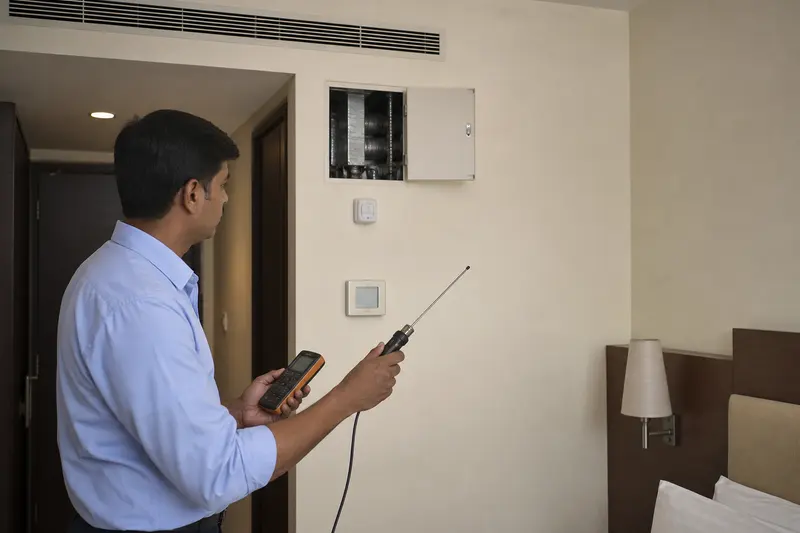
Kota · Automation
In Kota, we plan hvac automation backwards from the handover test rather than forwards from a device list. The Aerodrome Circle team asks how a user will prove Central HVAC integration works, what manual action remains available when Failure behaviour is unavailable, and which records are needed to maintain Thermostat control. Those checks define the survey and commissioning evidence. SmartR Home - Aerodrome Circle still confirms the exact project address before scheduling; the office location tells us nothing about conditions elsewhere in Kota.
The short answer
HVAC automation can schedule operation, adjust approved setpoints, respond to occupancy and show available status. The exact control depends on the manufacturer interface. Infrared commands, dry contacts, gateways and BACnet points expose very different levels of feedback.
For the full technical explanation, use our HVAC Automation planning guide.
What the design has to settle
The equipment controller normally protects compressors, fans and plant sequences. The automation layer should request permitted modes or setpoints rather than bypassing those safeguards.
Occupancy can shift setpoints or release a room after a delay. It should not cause rapid cycling, erase a user override or contradict ventilation requirements.
Capabilities range from one-way infrared commands to manufacturer gateways with state feedback. The exact indoor-unit model and interface list are checked before the proposal names any feature. Remote-controller behaviour is tested alongside…
Central systems introduce plant controllers, valves, dampers, sensors and operating sequences. SmartR Spaces can integrate agreed building-control points; mechanical design and balancing remain separate responsibilities.
Need more depth? The complete HVAC Automation guide covers the wider technical context.
Technical relationships
These service-specific diagrams come from the canonical technical record; they do not depict a completed local project.


Decision aid
| Interface | Feedback | Main limitation |
|---|---|---|
| Infrared command | Often none or inferred | State can drift from the real unit |
| Dry contact | Limited state | Usually coarse enable or mode control |
| Documented gateway or BACnet | Model-dependent points | Needs verified compatibility and mapping |
Local planning
Branch facts are verified. Community observations, when present, are anecdotal and address-specific; they are not presented as citywide facts.
Evidence scope: Several commenters rejected the high estimate and reported much lower typical bills. The discussion has no bills, meter audits or tariff documents.
What this service can and cannot address: SmartR Spaces can design submeter integration, room energy states, HVAC setpoint controls and transparent usage dashboards where compatible meters and policies exist. It cannot set tariffs, validate a hostel's billing or guarantee a savings percentage.
Local planning questions
Test the promised user outcome for Central HVAC integration, the defined fallback for Failure behaviour and the operator procedure for Thermostat control. Results should be recorded against the approved scope, not accepted from a product demonstration.
Share the exact address, expected user actions, existing equipment, known faults and any manuals or drawings. SmartR Home - Aerodrome Circle uses that information to decide what must be inspected.
The design should state the safe or manual fallback, the visible fault indication and the support owner for each critical function. A fallback is verified during commissioning only when it is part of the written scope.
Keep separate results for Central HVAC integration, Temperature logic, Failure behaviour, Split AC control, Thermostat control. For each one, record the user action, expected response, measured or observed result, fallback check, outstanding defect and person who witnessed acceptance.
Installation context
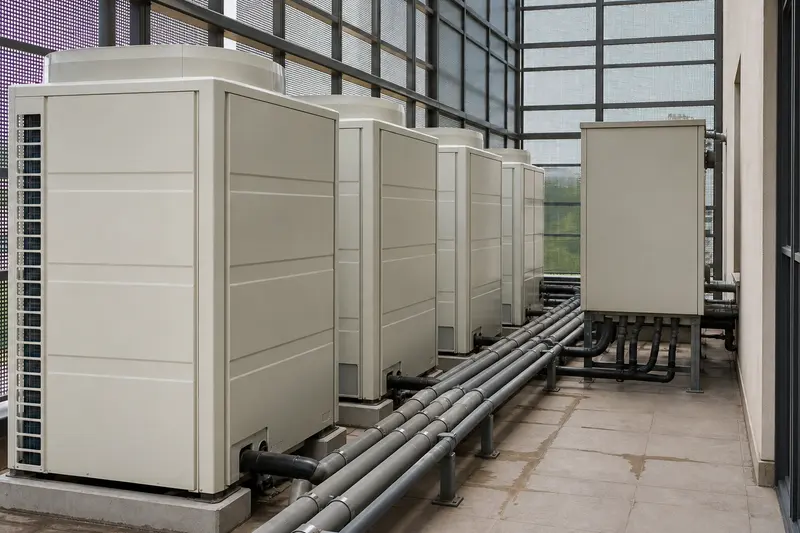
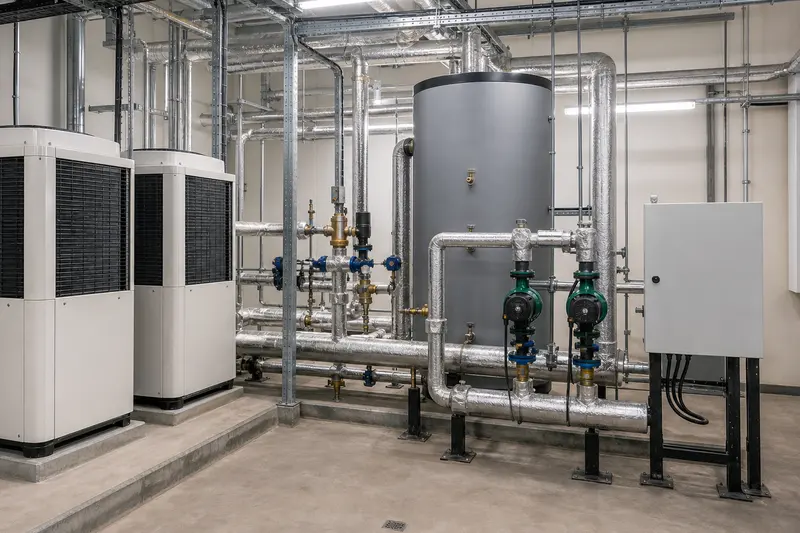
Representative photography supports planning; it is not presented as a completed SmartR Spaces project in Kota.
Verified branch
Confirm availability before visiting.
Continue planning