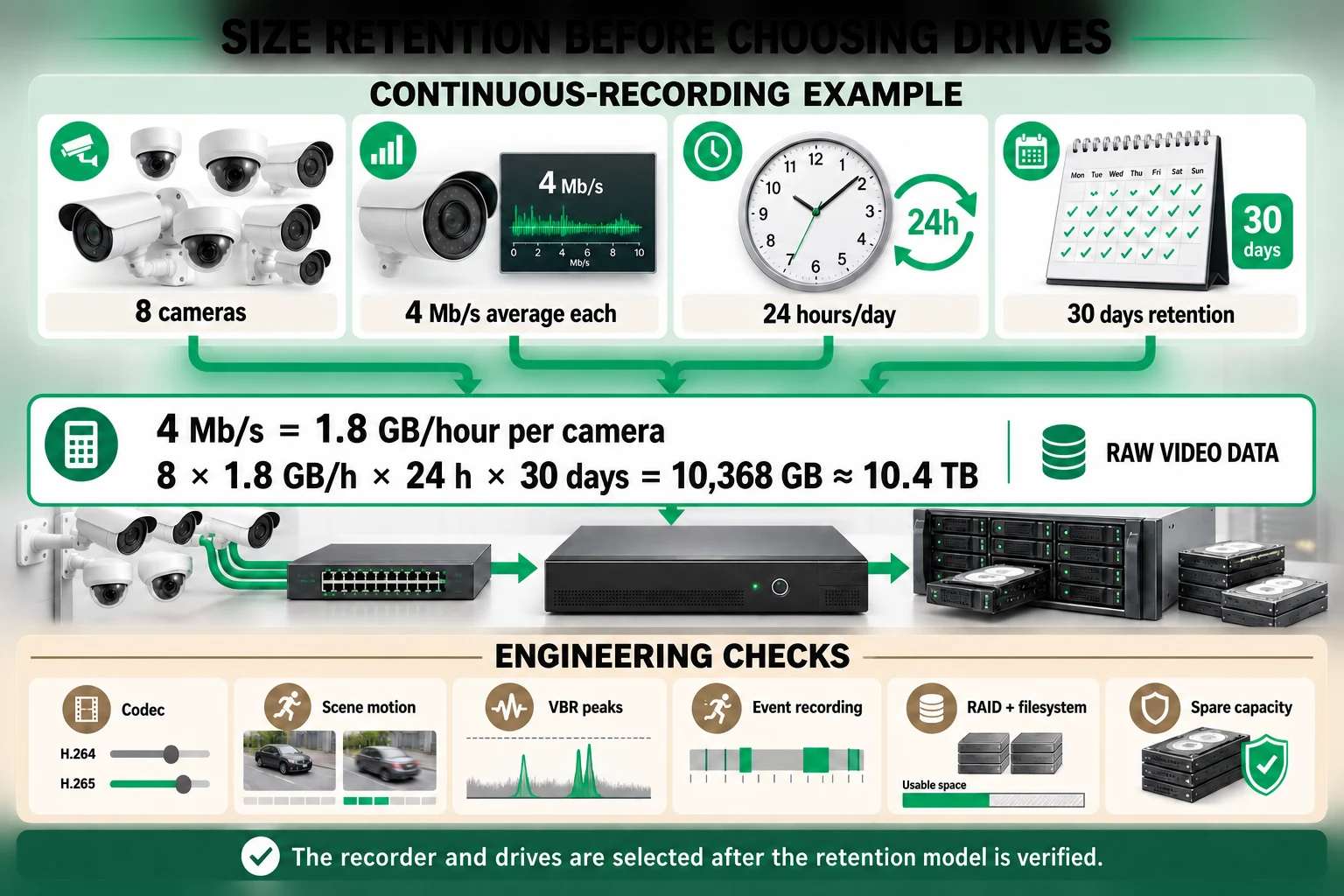
What should we decide before ordering?
Design the view before choosing the camera
For cctv surveillance, overview often calls for follow activity across a space. Each job needs different scene width, pixel density, angle and light. Resolution on the box tells only part of that story. The project timeline places the overview survey before equipment selection, followed by installation and a witnessed wide scene, low identification detail check. The written decision is wide scene, low identification detail; the related keep camera traffic predictable review then checks that choice against the site's actual users, opening or camera view, and failure response.
For cctv surveillance, recognition often calls for recognise a known person. Lens choice and mounting height follow from that. The written decision is tighter view and controlled angle; the related prove retention with playback review then checks that choice against the site's actual users, opening or camera view, and failure response.
Recording is a storage and access policy
For cctv surveillance, identification often calls for support a clear identity judgement. We calculate it with headroom, then test playback and export. The written decision is high subject detail and suitable light; the related keep camera traffic predictable review then checks that choice against the site's actual users, opening or camera view, and failure response.
For cctv surveillance, plate capture often calls for read vehicle plates. The written decision is dedicated lane geometry and shutter settings; the related prove retention with playback review then checks that choice against the site's actual users, opening or camera view, and failure response.
Analytics narrow attention; they do not establish truth
For cctv surveillance, overview often calls for follow activity across a space. They also miss events and create nuisance alerts when the scene, light or threshold changes. Maintenance revisits wide scene, low identification detail, user access and the physical condition that could change this result after handover. The written decision is wide scene, low identification detail; the related keep camera traffic predictable review then checks that choice against the site's actual users, opening or camera view, and failure response.
For cctv surveillance, recognition often calls for recognise a known person. Sensitive uses such as face matching need a separate legal, privacy and operational review. A simpler alternative is retained whenever the site can meet the same need with a staffed, mechanical or non-analytic process. The written decision is tighter view and controlled angle; the related prove retention with playback review then checks that choice against the site's actual users, opening or camera view, and failure response.