What is measured or modelled?
Room dimensions, surfaces, source and listener positions, background noise and decay behaviour inform treatment. Isolation work also needs wall, floor, ceiling, door, glazing and service-penetration details.
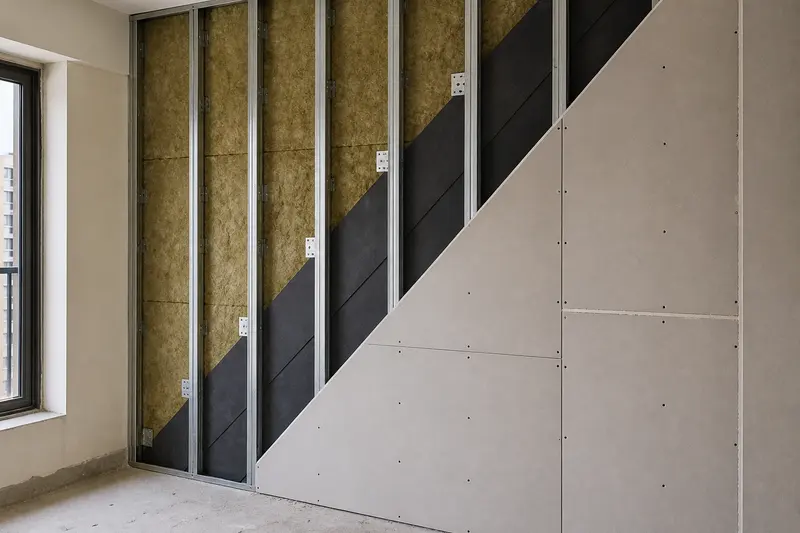
Jaipur · Audio, Video and Entertainment
In Jaipur, we start acoustic treatment and soundproofing planning with the property stage and the documents already available. The first survey brief should identify Acoustic treatment, Home theatre acoustics and Acoustic panels; each item is then tied to a room, user action or operating outcome. SmartR Spaces (Pannadhaya Circle) coordinates the enquiry, but its address does not tell us what the building needs. A proposal follows only after drawings, existing equipment and installation access are checked for that Jaipur property.
The short answer
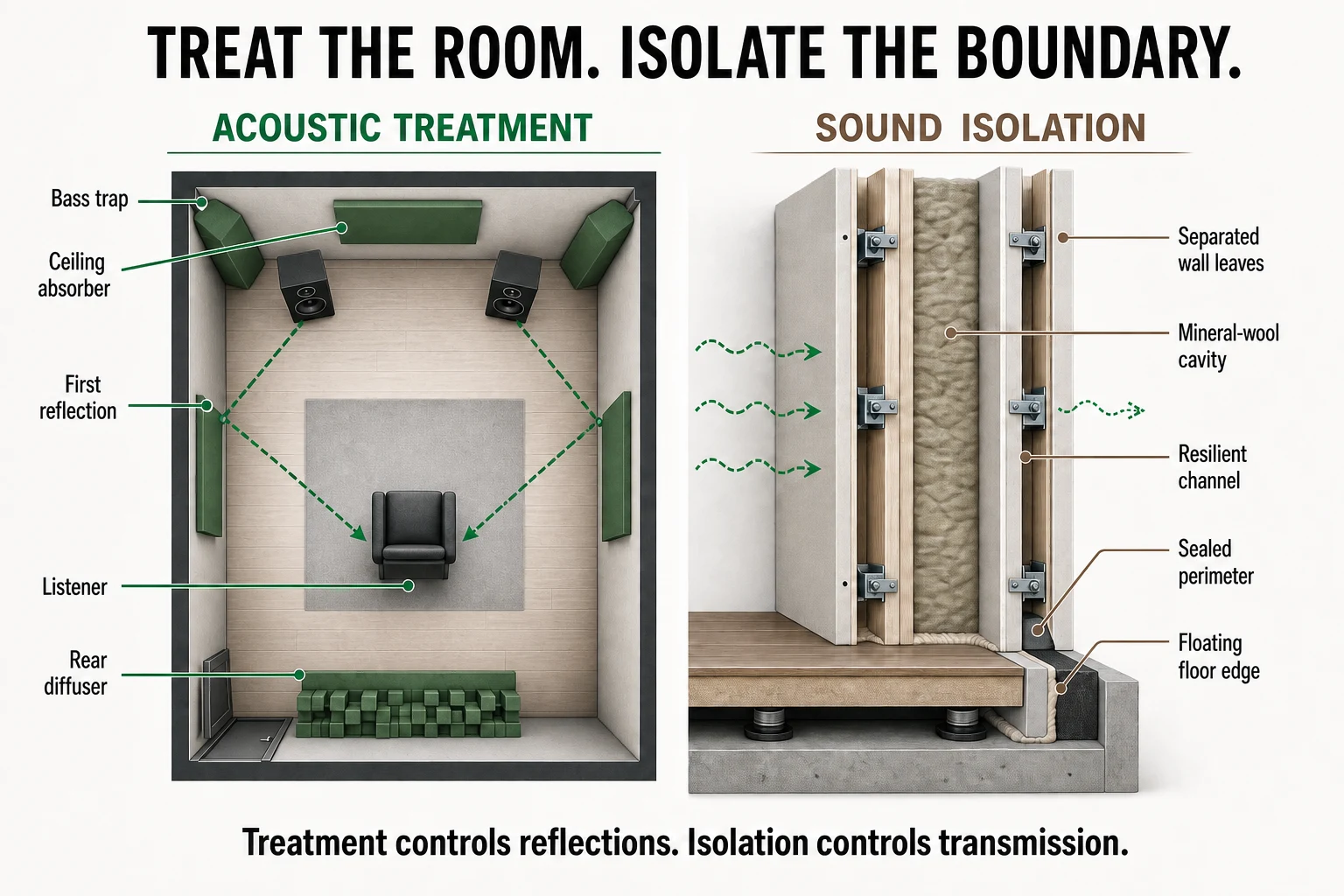
Acoustic treatment uses absorption, diffusion and room geometry to manage reflections and decay. Sound isolation uses mass, airtight construction, separation and controlled flanking paths to reduce transmission. A thin decorative panel may improve a reflection, but it cannot isolate a wall by itself.
For the full technical explanation, use our Acoustic Treatment and Soundproofing planning guide.
What the design has to settle
Room dimensions, surfaces, source and listener positions, background noise and decay behaviour inform treatment. Isolation work also needs wall, floor, ceiling, door, glazing and service-penetration details.
Long wavelengths interact strongly with room dimensions and structures. Thin porous panels have limited effect at low frequencies unless depth and placement support that job.
Placement follows reflection paths and decay needs, not a fixed percentage copied from another room. Too much high-frequency absorption can make a room dull while leaving bass untouched.
Sound can bypass a rated wall through doors, ceilings, ducts, structure and small gaps. Isolation design reviews the whole boundary and its junctions.
Need more depth? The complete Acoustic Treatment and Soundproofing guide covers the wider technical context.
Technical relationships
These service-specific diagrams come from the canonical technical record; they do not depict a completed local project.

Decision aid
| Problem | Likely discipline | First evidence |
|---|---|---|
| Speech sounds blurred inside the room | Acoustic treatment and system review | Room response and reflection paths |
| Sound disturbs an adjacent room | Sound isolation | Construction and flanking-path survey |
| Bass varies between seats | Room and subwoofer analysis | Seat-to-seat low-frequency measurements |
Local planning
Branch facts are verified. Community observations, when present, are anecdotal and address-specific; they are not presented as citywide facts.
Evidence scope: One commenter said police attended and stopped wedding music, while another described unsuccessful calls. The thread cannot establish enforcement reliability or citywide noise levels.
What this service can and cannot address: SmartR Spaces can model speaker coverage, limiters, isolation and acoustic leakage within a property. It cannot grant event permissions, enforce noise rules or promise that treatment will make an unlawful sound level lawful.
Evidence scope: Other viewers praised particular auditoriums, and image perception depends on the title, seat and calibration. The thread is not a measured technical audit.
What this service can and cannot address: SmartR Spaces can specify sightlines, screen luminance targets, speaker geometry and commissioning measurements for the room being designed. It cannot infer a private project's performance from cinema comments or guarantee subjective preference.
Local planning questions
Start with the rooms or operating zones, the people using them and the outcome required from Acoustic treatment, Home theatre acoustics and Acoustic panels. Drawings and existing-equipment details help turn that brief into survey checks.
A survey is needed before the proposal depends on unverified cable routes, mounting positions, power, network reach or interfaces. SmartR Spaces (Pannadhaya Circle) first confirms the address and what must be inspected.
The written scope should list included rooms, selected functions, interface responsibilities, exclusions and the acceptance test for each promised outcome. Product names alone are not an approval record.
Give Acoustic treatment, Sound isolation, Home theatre acoustics, Auditorium acoustics, Acoustic panels their own drawing note, schedule row or decision reference where they affect the installation. The record should show the intended location, control or connection, responsible trade and unresolved dependency before ordering begins.
Installation context
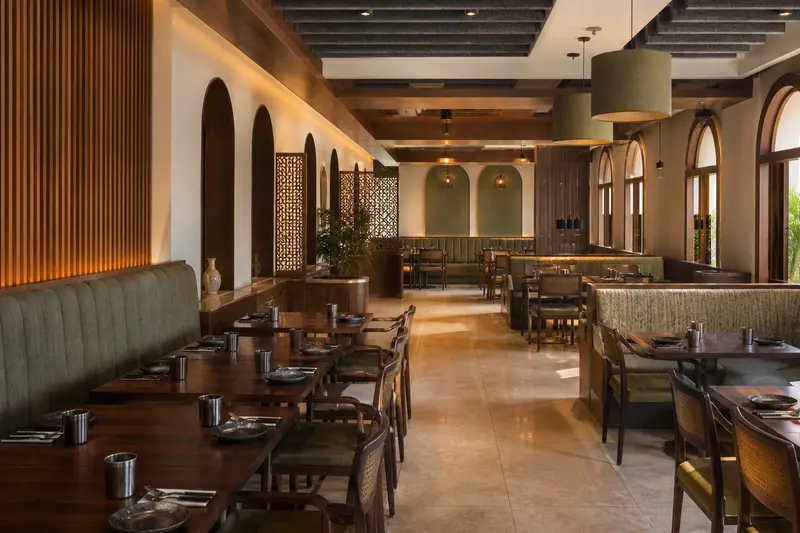
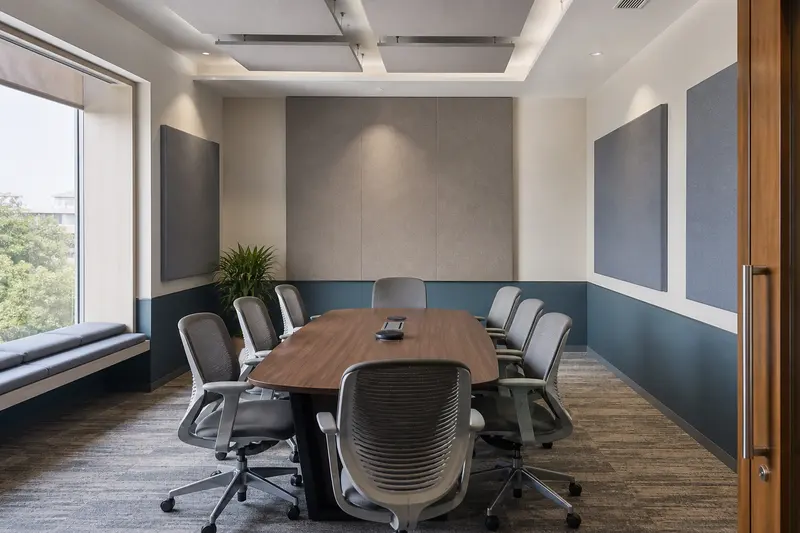
Representative photography supports planning; it is not presented as a completed SmartR Spaces project in Jaipur.
Verified branch
Confirm availability before visiting.
Continue planning