What is measured before the motor is chosen?
Record opening width, drop, stack space, fabric and lining weight, track bends, mounting surface and access side. For roller shades, tube size and pocket clearance also shape the motor choice.
Jaipur · Automation
In Jaipur, we start shading automation planning with the property stage and the documents already available. The first survey brief should identify Motorised curtains, Automated drapes and Control methods; each item is then tied to a room, user action or operating outcome. SmartR Spaces (Pannadhaya Circle) coordinates the enquiry, but its address does not tell us what the building needs. A proposal follows only after drawings, existing equipment and installation access are checked for that Jaipur property.
The short answer
A motorised curtain or blind needs a motor matched to the mechanism, load and travel, plus power and a control interface. The controller can schedule or group movement, but it cannot correct a bent track, poor bracket spacing or an inaccessible motor.
For the full technical explanation, use our Shading Automation planning guide.
What the design has to settle
Record opening width, drop, stack space, fabric and lining weight, track bends, mounting surface and access side. For roller shades, tube size and pocket clearance also shape the motor choice.
Open and close limits prevent overrun. Group commands are staggered where the electrical or control design calls for it, and each shade is tested for obstruction, alignment and repeatability.
Curtain motors pull carriers along a track; tubular motors rotate a roller; blind drives may lift, tilt or do both. These are different loads and need different mechanical details.
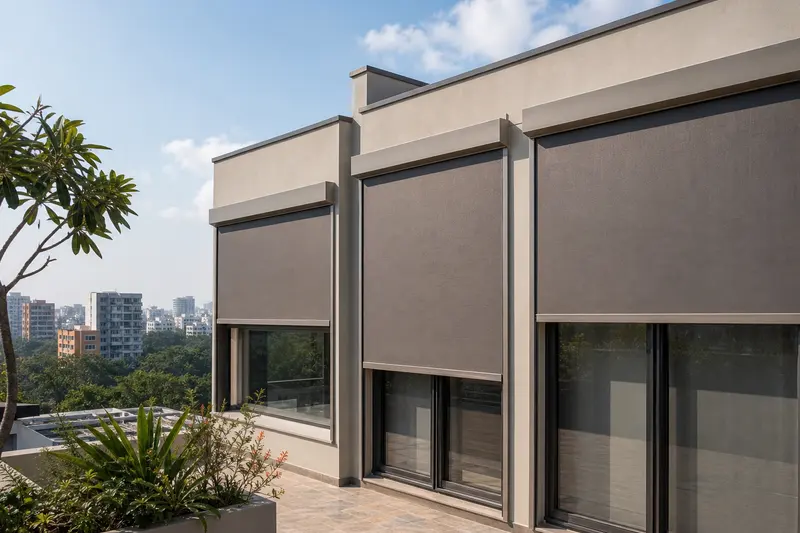
A controller can use time, façade orientation, light data or an approved weather input. Occupant override and safe wind behaviour still need project rules, especially for exterior products.
Need more depth? The complete Shading Automation guide covers the wider technical context.
Technical relationships
These service-specific diagrams come from the canonical technical record; they do not depict a completed local project.


Decision aid
| Mechanism | Critical measurement | Service question |
|---|---|---|
| Curtain track | Fabric mass, width and bends | Can the motor and carriers be reached? |
| Roller shade | Tube, drop and fabric | Is the pocket removable? |
| Exterior blind | Wind exposure and safe state | Which weather interface is approved? |
Local planning
Branch facts are verified. Community observations, when present, are anecdotal and address-specific; they are not presented as citywide facts.
Evidence scope: The post contains no completed installation, performance result, wind condition, building permission or reason that the screen must be motorised.
What this service can and cannot address: SmartR Spaces can survey opening size, wind and rain exposure, drainage, fixing substrate, safe state, manual recovery and an approved weather input for a suitable motorised product. It cannot promise weatherproofing, override facade or society rules, or make an unsuitable screen safe in wind.
Evidence scope: This is one product experience with no measured indoor temperature, water use, humidity, facade condition or comparison against conventional shading and cooling.
What this service can and cannot address: SmartR Spaces can compare conventional shading, a suitable motorised treatment and an explicitly engineered custom control only after checking water, electrical, hygiene, overflow and maintenance risks. It should not automate an improvised drip setup or repeat the claimed temperature reduction as fact.
Local planning questions
Start with the rooms or operating zones, the people using them and the outcome required from Motorised curtains, Automated drapes and Control methods. Drawings and existing-equipment details help turn that brief into survey checks.
A survey is needed before the proposal depends on unverified cable routes, mounting positions, power, network reach or interfaces. SmartR Spaces (Pannadhaya Circle) first confirms the address and what must be inspected.
The written scope should list included rooms, selected functions, interface responsibilities, exclusions and the acceptance test for each promised outcome. Product names alone are not an approval record.
Give Motorised curtains, Motorised blinds, Roller shades, Automated drapes, Motor selection, Control methods their own drawing note, schedule row or decision reference where they affect the installation. The record should show the intended location, control or connection, responsible trade and unresolved dependency before ordering begins.
Installation context
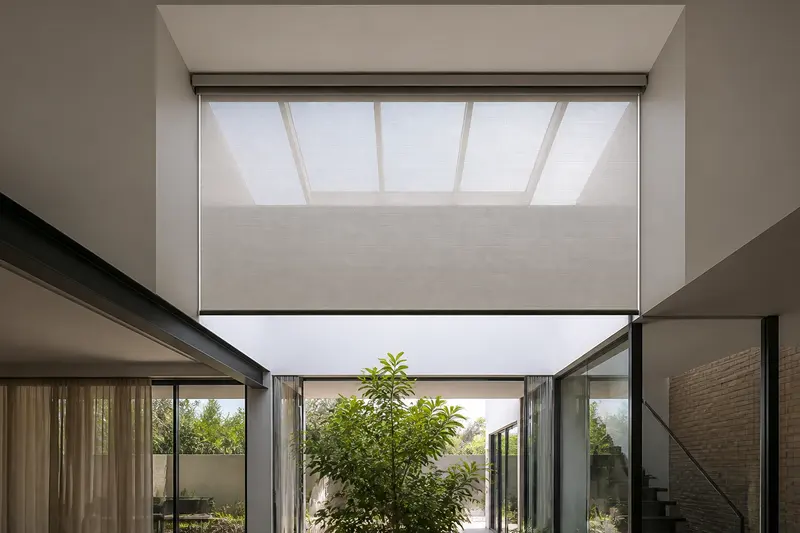
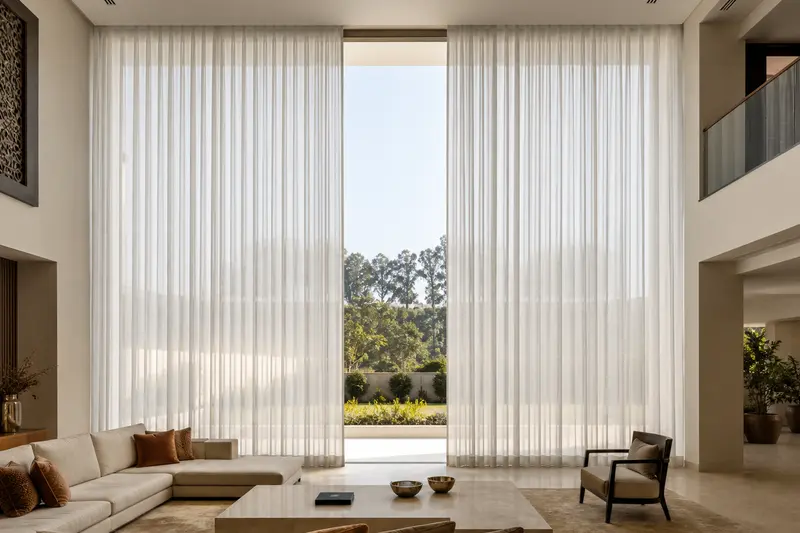
Representative photography supports planning; it is not presented as a completed SmartR Spaces project in Jaipur.
Verified branch
Confirm availability before visiting.
Continue planning