Smart Versus Merely Automated
A SmartR Spaces Field Note: one visual idea about how homes and buildings behave, fail, and improve.
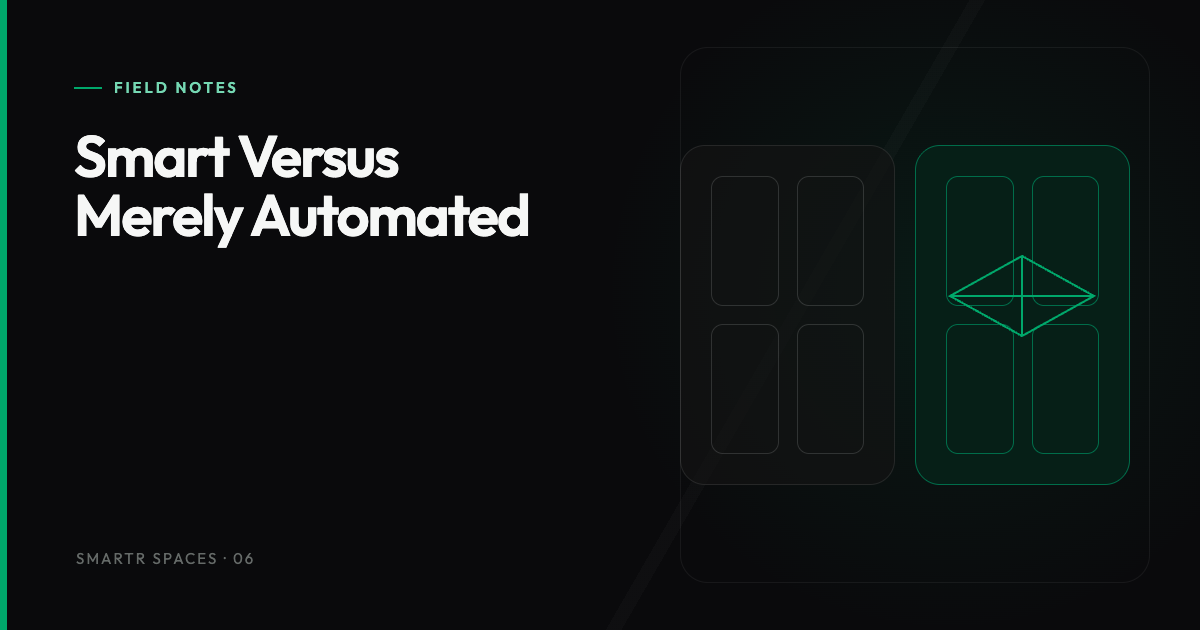
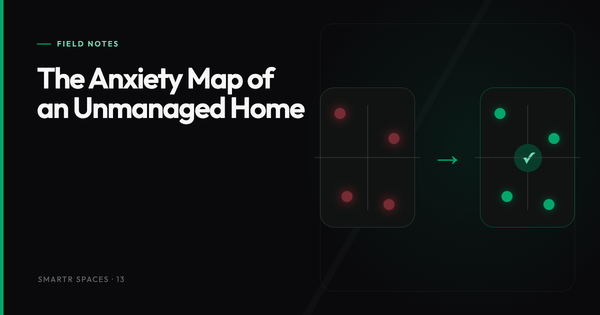
A timer can automate a light. It cannot tell whether anybody needs the light. That gap separates a connected schedule from a system that uses occupancy, daylight, temperature, and actual state. This split-screen visual shows the difference without pretending every decision needs machine learning.
Context does not have to be complicated. A door contact, an occupancy sensor, and a clear time window can solve more than a grand promise about artificial intelligence. Begin with rules the household can explain. Add prediction only when it improves a measured outcome and does not remove the owner's control.
Explore SmartR Spaces services or read the home automation guide for India.